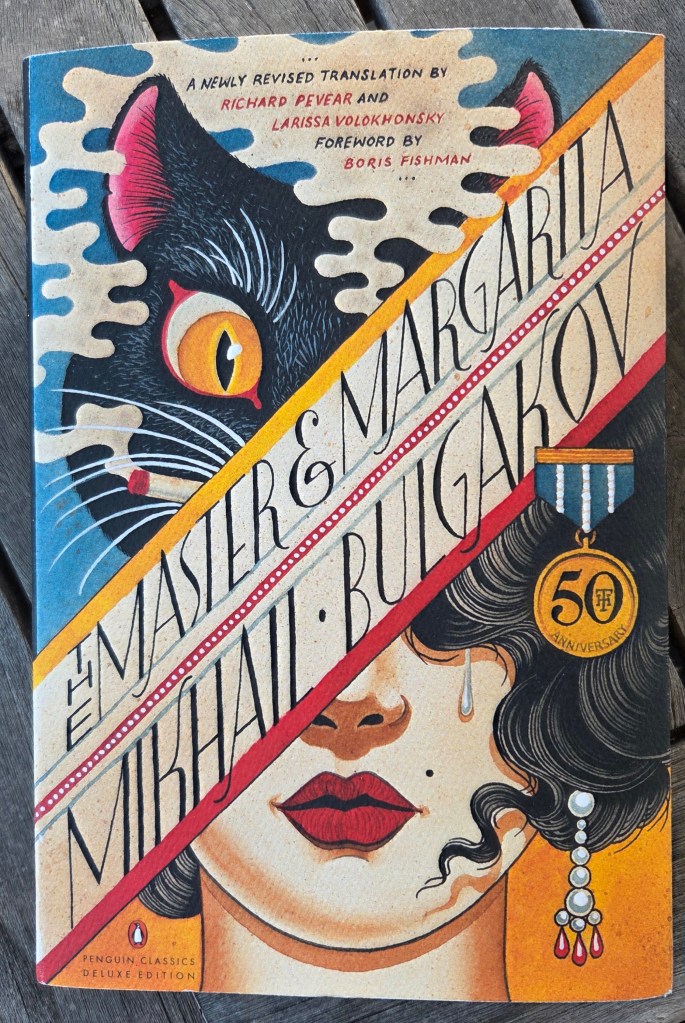
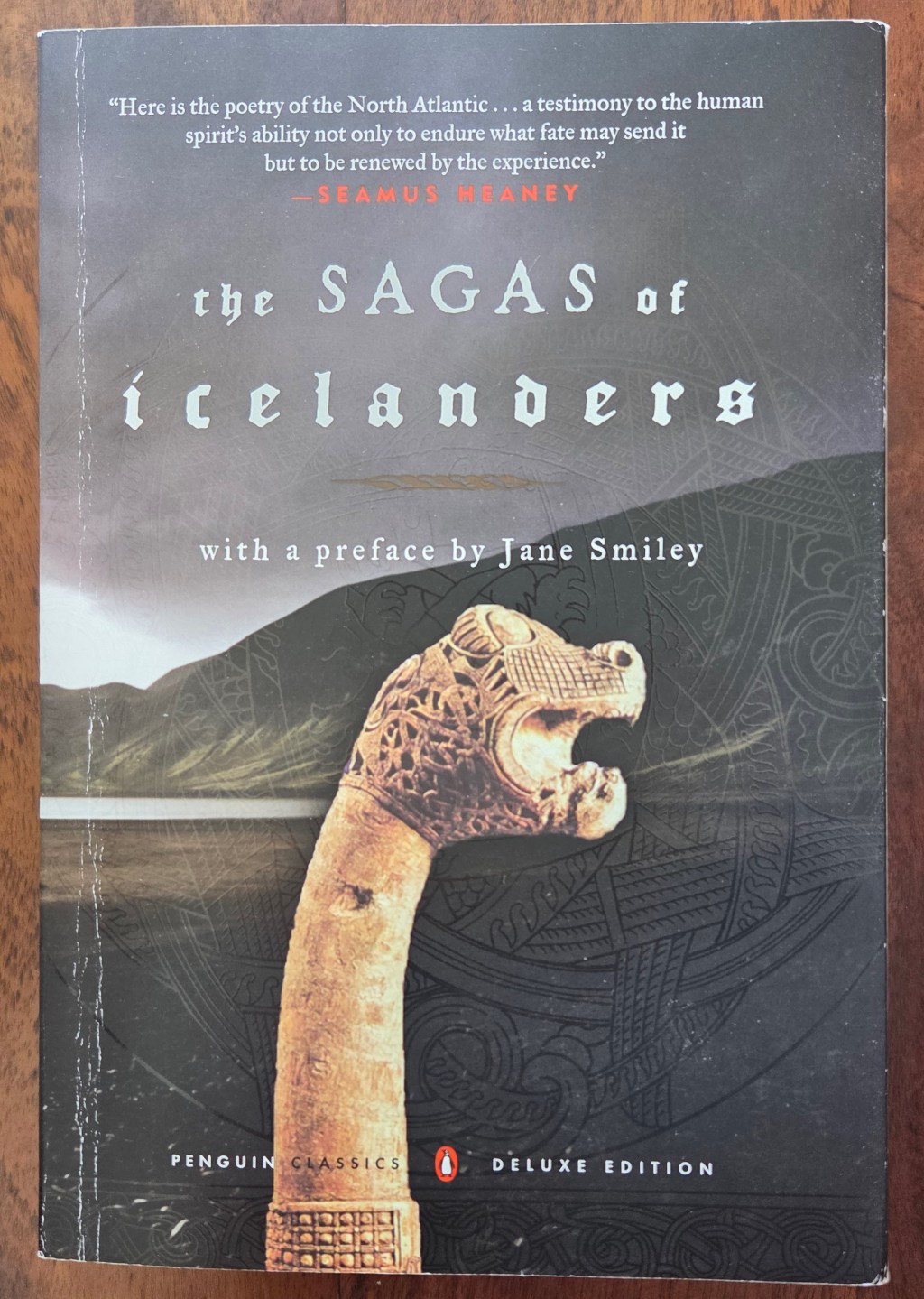
This is a huge volume I started this summer and am still working through. It’s fascinating but A LOT.
We’re going Iceland in October 2025, and this is one way I’m trying to immerse myself in the history and culture. The stories take place mostly in Norway and Iceland, from around 830 to 1030 AD; they were written down a few centuries later and according to the essay at the beginning of my edition, Jayne Smiley ranks these tales right up there with other world lit masterpieces, calling them “as epic as Homer, as deep in tragedy as Sophocles, as engagingly human as Shakespeare.”
My interest was also piqued on hearing the sagas are often considered the first European prose novels (preceded by Gilgamesh, written oh-so-long-ago BC in Mesopotamia, and other epic poems; and by the prose Tale of Genji by Murasaki Shikibu in 11th century Japan).
Smiley writes about how many modern novel-writing conventions are in the sagas: psychological depth, understated prose, foreshadowing, and objective realism, for example. And they really do read a lot like modern fiction, except for the long, long paragraphs of who’s son is who’s son is who’s son. Or dottir!
I’m happy to report, though (because I like this sort of thing), they also relate pretty some mystical happenings, brushes with supernatural creatures, and far-fetched feats. Like Grettir’s epic swim to Drangey and back, which I’ll be thinking about if we make it to this hot spring where he warmed his bones afterwards.
 If I Had a Book Club
What do you think?